The SCR framework
October 22, 2025
Product Management
The SCR framework is a methodology that McKinsey uses to structure business pitches. The letters S-C-R stand for Situation-Complication-Resolution, which are the three steps this framework follows.
The idea for the SCR framework comes from the classic storytelling arc of:
- Exposition: letting you meet the main characters and what their problems are.
- Climax: the action rises to a point where the situation starts exploding.
- Resolution: the characters find a way to solve the problem and everyone is happy and the story ends.
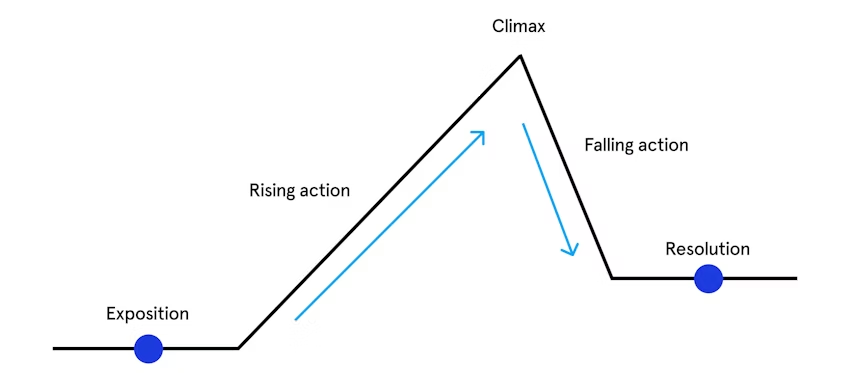
Similarly, SCR uses a three-part structure to build a narrative:
- Situation: description of the current situation the business is in.
- Complication: why the situation requires action. What is the problem (or opportunity)?
- Resolution: how can we resolve this situation or benefit from it?
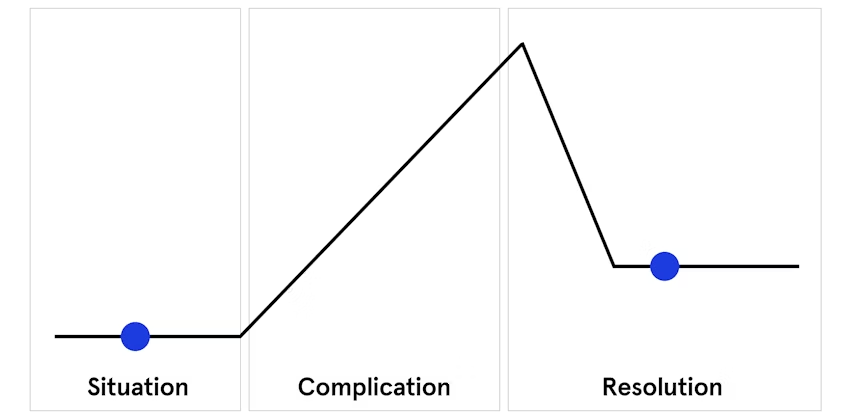
This framework can also be applied to Product Management, to describe a pain that clients have or a situation that could be improved in the product and how to solve it.
An example:
- Situation: Our SaaS onboarding process for new users requires filling out 15 separate forms across 3 different screens, leading to an average onboarding time of 45 minutes.
- Complication: This lengthy and fragmented flow causes a 25% drop-off rate during onboarding, resulting in lost potential customers and increased support requests.
- Resolution: Redesign the onboarding flow to consolidate forms into a single, progressive interface with inline validation, targeting to reduce onboarding time to under 15 minutes and cut drop-off rates by half within the next quarter.
I like using this structure for defining tasks in product-driven teams because it focuses on providing context, not instructions. By clearly laying out the situation and the problem, it lets developers and designers bring their own creative solutions rather than following a prescribed step-by-step path.